


Orthopedic Acupuncture is a western, anatomy-based contemporary development in the field. It is widely used in sports therapy and rehabilitation as well as for acute and chronic pain. It uses gait analysis, manual muscle testing, ROM and length testing to identify compensatory patterns of movement caused by injury, pain & inflammation.
Using targeted frequency electric stimulation, needles are inserted into muscles, joints, tendons and other affected areas. Painful trigger points, inhibited motor points and areas surrounding injury or surgery are needled to reduce pain, inflammation and to restore balance between agonist, antagonist and synergistic muscle groups.
The acupuncture market for the treatment of musculoskeletal conditions currently has a compound annual growth rate (CAGR) of 12.5% and is expected to grow from $US 37.4 billion in 2024 to $US 95.0 billion by 2032 (1). Demand for acupuncture is led by rising chronic pain conditions, pharmaceutical side effects and the promotion of superior patient outcomes (Patil, N.D.)
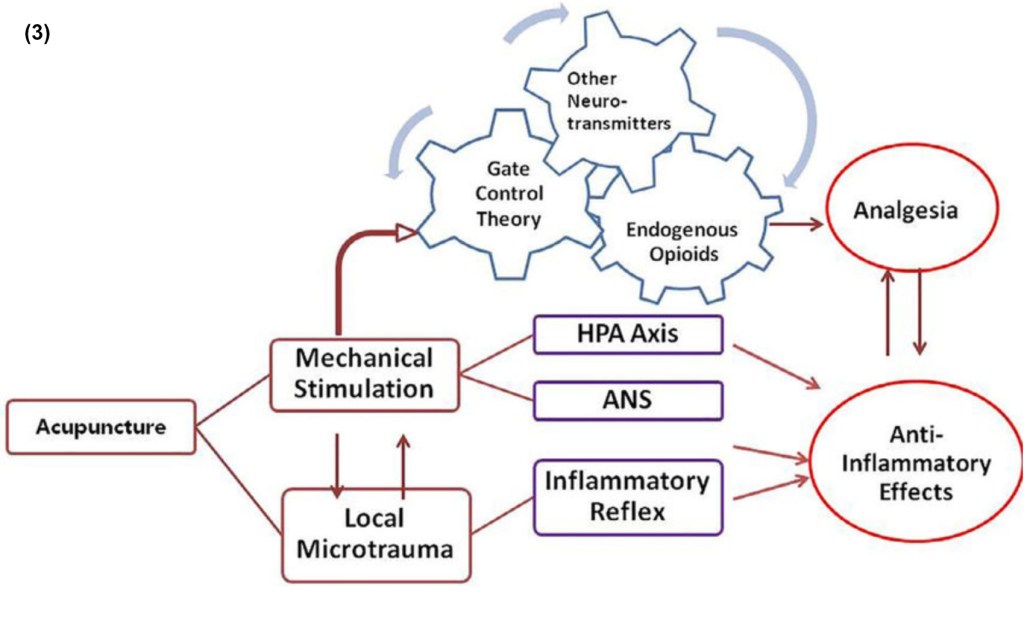
Needle insertion into soft tissue stimulates nerve fibers which activates the CNS, causing the release of endogenous opioid peptides at the insertion site such as Beta endorphins, Enkephalins, Dynorphins as well as neurotransmitters GABA and Serotonin (Cui et al., 2021). Individuals with acute pain may feel relief immediately while those with chronic conditions may need multiple treatments
Acupuncture also inhibits pro-inflammatory cytokines by activating the HPA axis, cholinergic and the vagus-adrenal medulla-dopamine pathways (Xia et al., 2019; Jiang et al., 2023). Finally, needle insertion has been shown cause an immediate rise in local nitric oxide levels, correlating with increased oxygen and blood flow to affected tissues (Kubo et al., 2010). This circulation boost also reduces muscle inflammation, repairs sprained micro-tears and accelerates recovery by delivering essential nutrients to damaged areas (Tsuchiya et al., 2007). These actions reinforce studies which show that acupuncture significantly reduces post-operative pain, has an opioid-sparing effect and speeds in the recovery of muscles, joints & tissues (Sun et al., 2008; Xue et al., 2025).
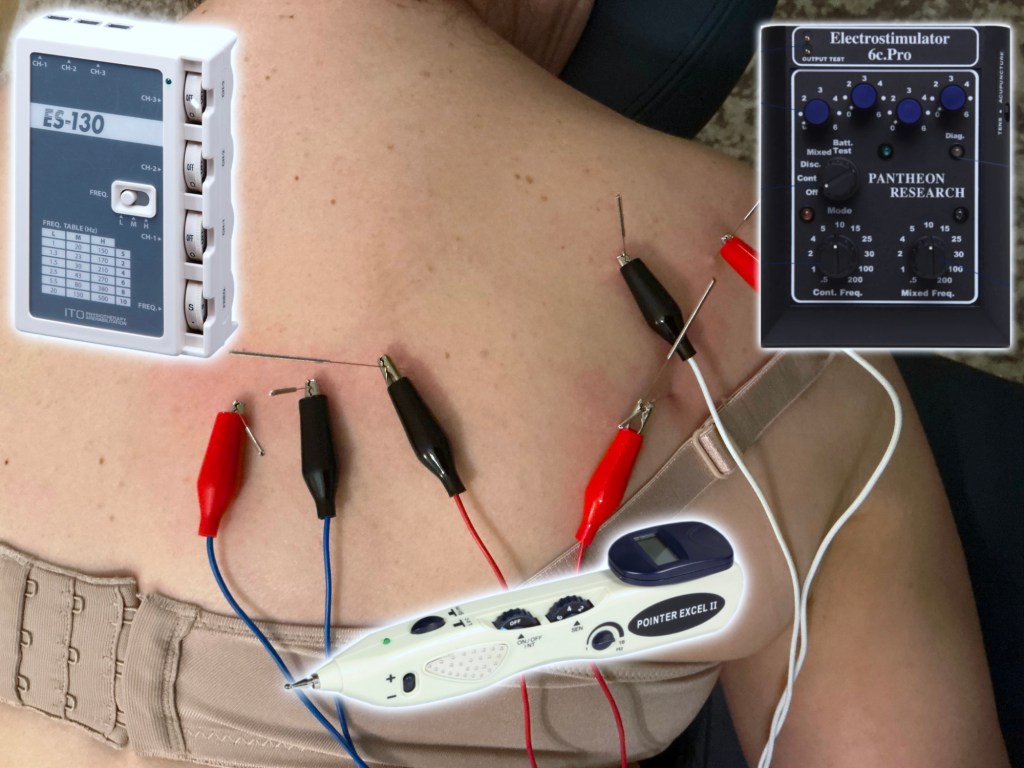
Electroacupuncture (EA) uses a device which delivers a targeted electric current between pairs of needles offering enhanced, continuous stimulation. EA has been shown to be superior to manual acupuncture by producing more widespread, stronger and consistent physiological effects (Ulett et al., 1998). Selection of low, medium or high frequencies for electric stimulation is dependent on the type of treatment needed. EA can be a potent pain-relieving method, as it initiates muscular twitch responses which release tension and increases blood flow.
Low frequencies (1-5 hz) are typically used for chronic pain relief, to normalize the ANS, reduce muscle spasms and improve circulation (Wang et al., 2024). Medium frequencies (10-40 hz) are used to enhance joint mobility and activate inhibited muscles. They can also desensitize tendon pain (Zhang et al., 2014). High frequencies (80-150 hz) are used mainly for bone pain management, scar modulation and are effective for acute pain (Sun et al., 2025; Fang et al., 2024). A well-trained orthopedic acupuncturist is able to match the appropriate frequency with the physiological condition needed for recovery.
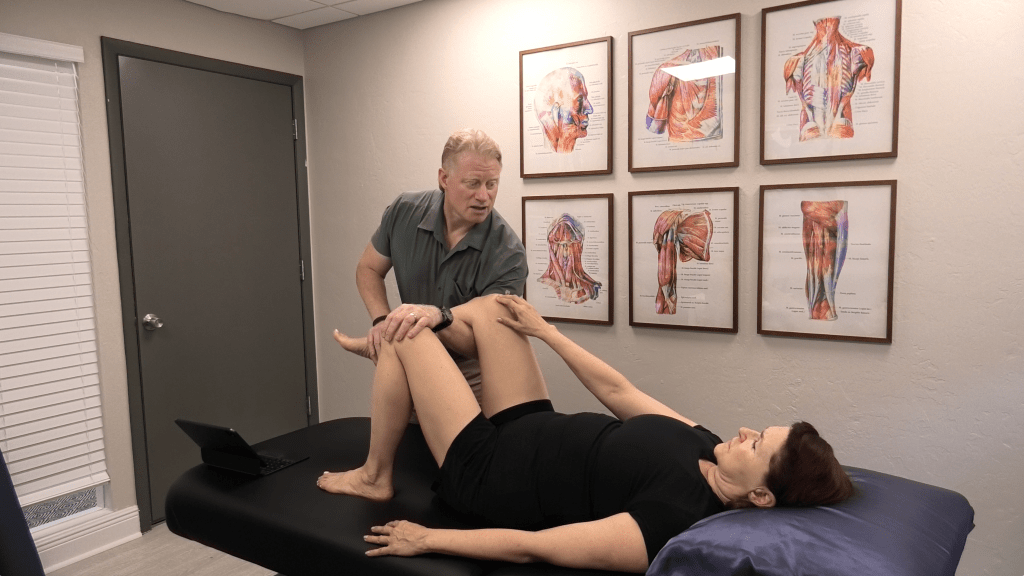
After surgery or injury, the selection of appropriate myofascial structures for needling within the current phase of recovery requires a foundational knowledge of orthopedic assessment and muscle testing. This requires an understanding of tonic & phasic muscles, reciprocal inhibition and the chain reaction that causes muscle inflammation & imbalance following injury or surgery.
Using palpation, physical examination, gait analysis and observation of how patients move, a correct discernment can be made where acupuncture treatment is needed.
Understanding the differences between inhibited and contracted muscles along a myofascial chain determines whether to use neuromodulation of motor points, a segmental treatment or to release painful trigger points when necessary. When correctly used, orthopedic acupuncture can reduce pain, restore ROM and flexibility as well as accelerate healing.
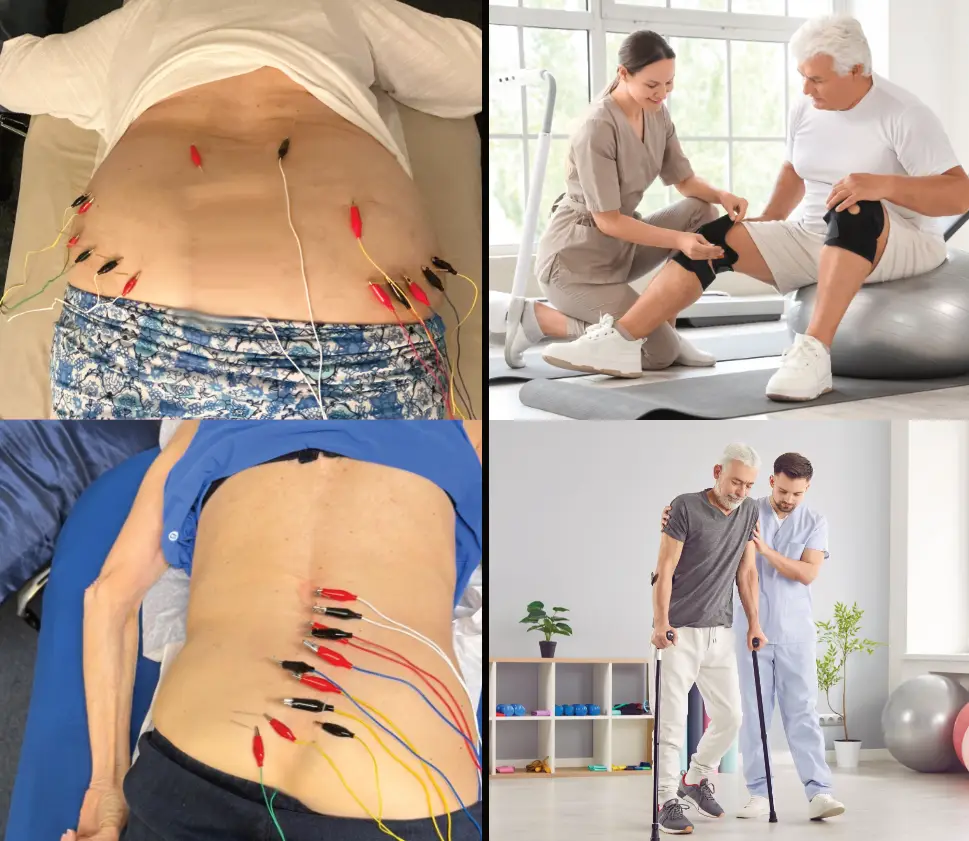
Patients recovering from injury, replacement and reconstructive surgeries as well as facet & spinal fusions benefit from orthopedic acupuncture as a first line of treatment.
Before physical therapy rehabilitation can begin, electroacupuncture should be used to directly alleviate pain, reduce inflammation, muscle guarding, and stimulate tissue healing (Gharby & Kioutchoukova, 2023; Specialist & Platon, 2025). This highlights the difference between these modalities: gate control vs. movement restoration. Acupuncture offers immediate pain modulation (through gate control theory) with increased blood, nitric oxide & oxygen flow to affected tissues following surgery or injury (Kubo et al., 2010).
The role of physical therapy may be used subsequentially for movement restoration, improving muscle strength, ROM, neuromuscular retraining and ultimately, to address the biomechanical dysfunction that contributed to the initial pathology (Peluso et al., 2022).